Postcrossing: A Postcard Project That Connects People Around The World
When customers are considering buying a postcard, I sometimes hear a variation of the question, “what do I even do with postcards anymore?” To that question, there are a multitude of answers.
The most obvious one is to send a quick note to a family member, friend or other loved one. Recconnect with someone you haven’t seen in years or surprise someone you see every day. Say hello and let them know how you’ve been. Send them a vacation update from a fabulous restaurant or a thoughtful note from the beach. Send a recipe from home or a book quote from a coffee shop.
[READ MY POSTCARD ETIQUETTE TIPS]
You can also collect postcards as souvenirs to fill things like scrapbooks, travel journals, or memory boxes—or you can build a dedicated postcard collection like baseball cards. I, of course, do this. I have books and books with cards mailed to me from family, friends, and strangers around the globe. I absolutely love thumbing through these books when I’m bored… it’s like taking a quick trip to a random place—somewhere I’ve likely never been and will likely never get to visit.
You could even use postcards as part of an art project: from inexpensive wall art or a photo collage to turning them into bookmarks, gift tags, magnets, greeting cards, mini canvases for drawing, painting, or mixed-media art.
And you can just simply embrace the joy of using an old technology to connect with others in a new way. Whatever that means to you.
But there are plenty other options.
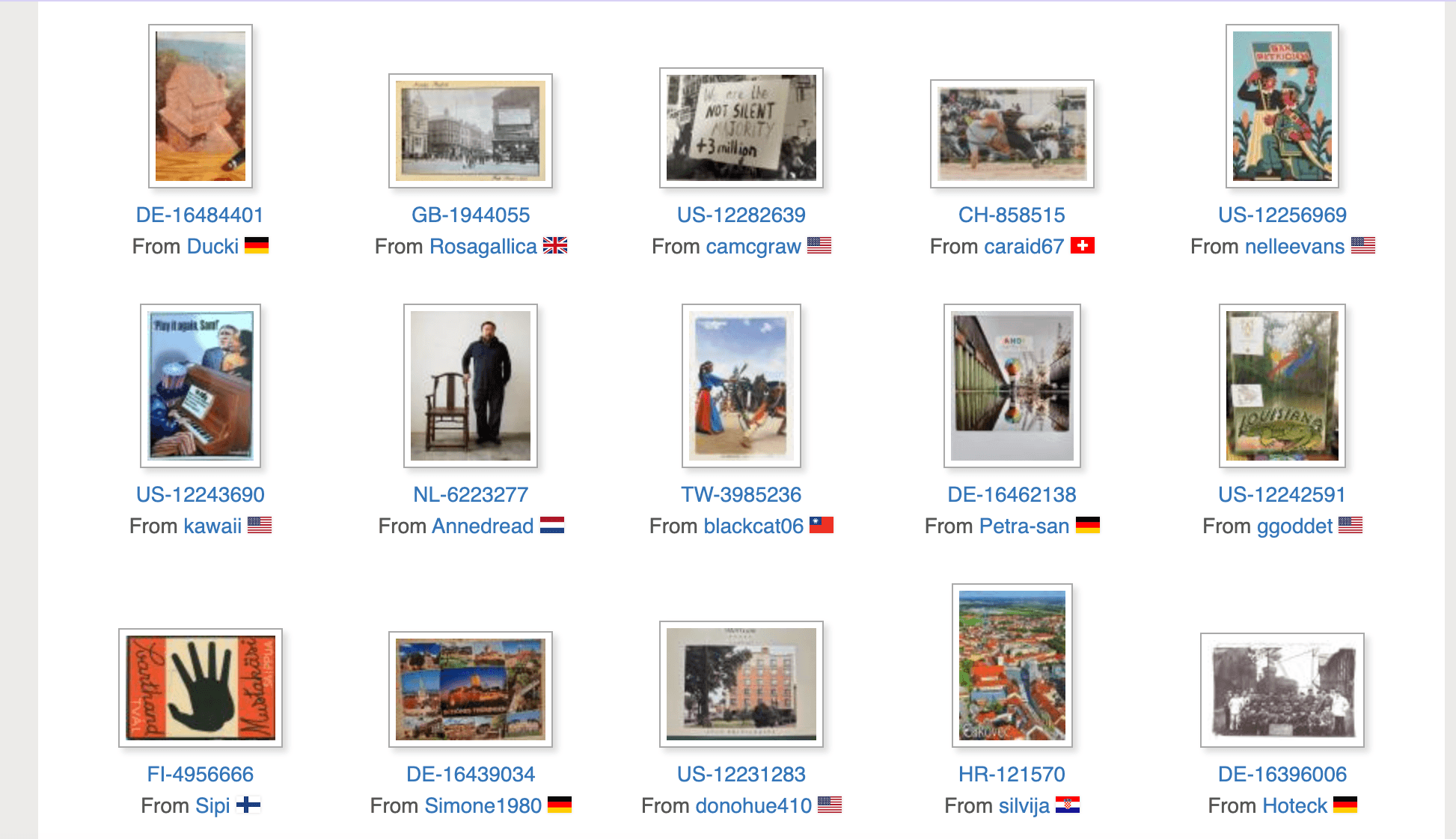
A screenshot of some of my recently received postcards on Postcrossing.
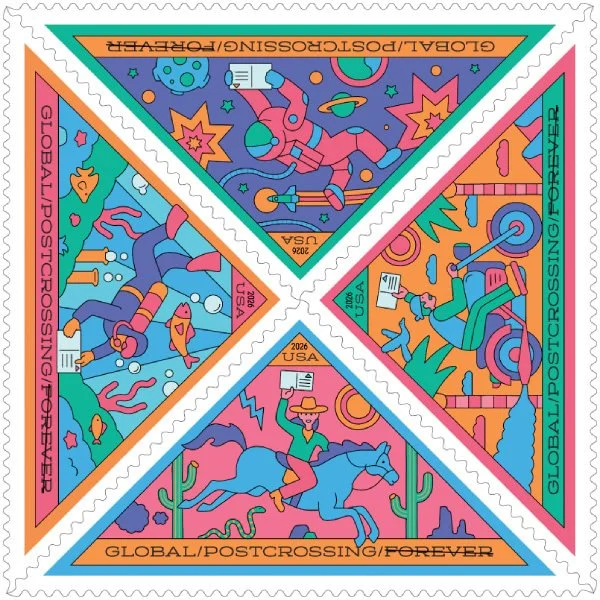
The four different triangular Postcrossing stamps being issued by the USPS begining May 23, 2026.
One of my absolute favorites: Mail a stranger. Or, more specifically, dozens and dozens of strangers.
Sites like Postcrossing.com allow individuals to send and receive postcards from fellow participants around the globe who speak the same language. The site facilitates the exchange of connection between people in far apart places who would otherwise never meet.
They even have their own USPS stamps now!
The primary objective of the Postcrossing project is to bring people closer through correspondence, with each postcard symbolically contributing to the creation of a “smaller and happier” world. Over time, the project’s website, which includes a blog and forum, has become a virtual space where countless friendships have formed.
Postcrossing has also served as a motivation for learning other languages, and it has offered an authentic framework for continuous intercultural exchange among participants from different parts of the world.
The exchange of postcards between strangers functions as a modern form of gift-giving, in which the social and symbolic value of the gesture matters more than the material value of the object sent (Salnikov & Salnikova, 2025).
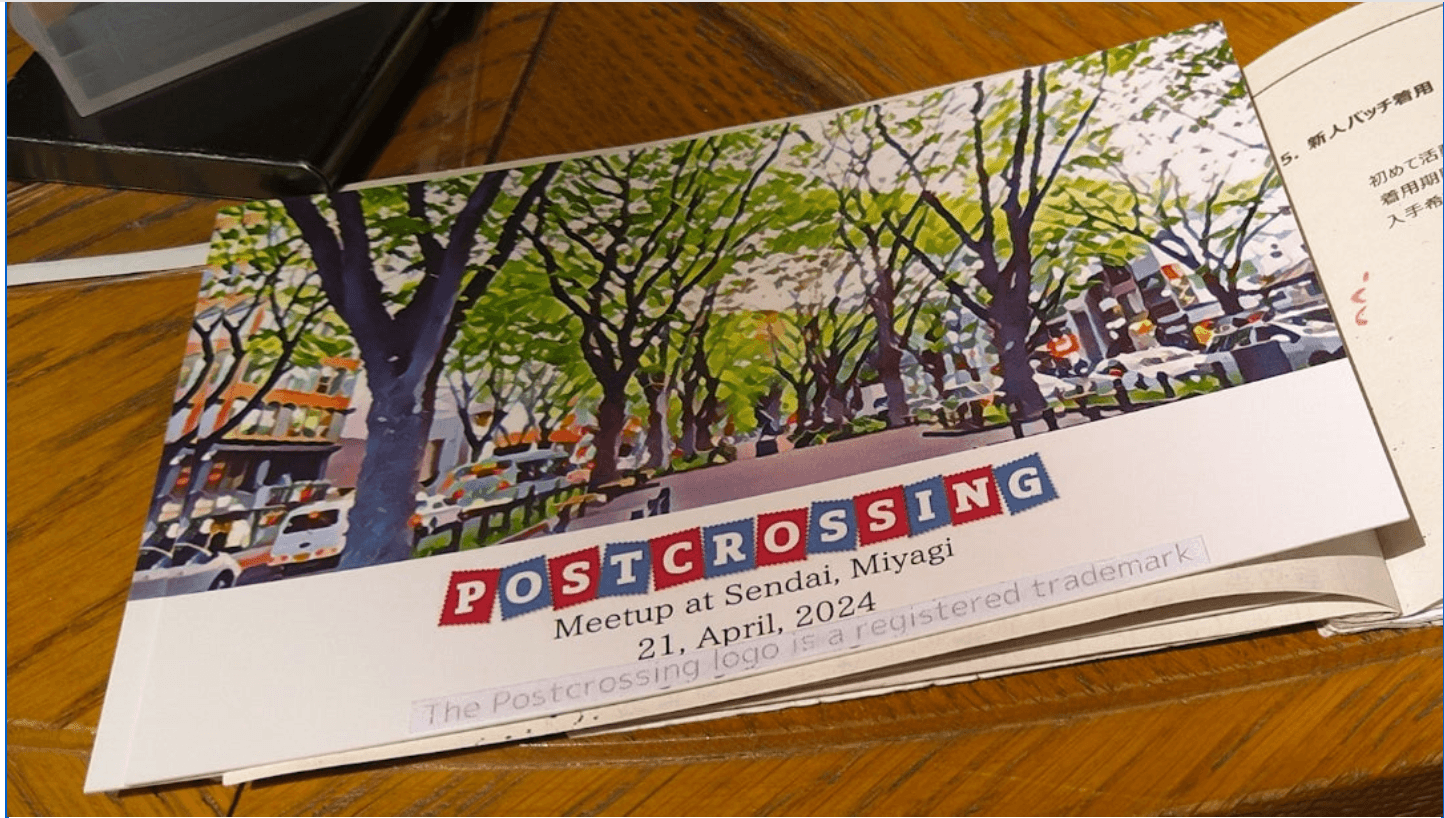
Postcrossing is more than just about postcards. Postcrossers—users of Postcrossing—regularly get together in locations all over the world for meetups, and there is even a tiny forest they help grow in central Portugal.
Lastly, Postcrossing has tremendous potential for classroom projects (in fact, it’s already been done) that connect students (and schools) around the globe, as well. This is something I will write more about in-depth later on the blog. But for now, let’s just say the positive benefits of Postcrossing activities on students from educational, linguistic, cultural, and emotional perspectives seem to be substantial.
Stay tuned for more on that…
—Adam